
![[Kisoondo] Traditional Doenjang](http://gochujar.com/cdn/shop/products/Doenjang-3a.jpg?v=1740460408)
[Kisoondo] Traditional Doenjang
All payments on Gochujar are handled securely by PayPal.
Don't want a PayPal account? You can still pay by credit or debit card. Here's how to check out as a guest:
- Click Pay now. A PayPal window will open.
- Choose Pay with Debit or Credit Card.
- Turn OFF Save info & create your PayPal account, then pay.
Need screenshots? See our step-by-step guide.
![[Kisoondo] Traditional Doenjang](https://cdn.shopify.com/s/files/1/2995/2038/files/Kisoondo_TraditionalDoenjang_2048x2048.jpg?v=1664771166)
100% Naturally Grown, Non-GMO Soybeans
[Kisoondo] Traditional Doenjang
- 2 ingredients only
- 100% Korean soybeans
- No MSG or preservatives
- Aged at least 1 year
Today, we introduce one of our best-selling, artisan-made doenjang: Kisoondo’s Traditional Doenjang (기순도 전통된장).
It’s made with only two ingredients. The first is soybeans, 100% Korea-grown and non-GMO. Each November, the beans are soaked in natural bedrock water drawn from deep underground, mashed when soft and molded into meju bricks.
The bricks go into large Korean hangari pots (breathing earthenware jars used for traditional fermentation). Then the second ingredient, roasted bamboo salt, is added to the pots. Compared to regular sea salt, roasted bamboo salt contains higher levels of iron, potassium and calcium.
Factory-made doenjang is usually fermented for about 6 weeks. Kisoondo ferments for at least one year, which gives a strong, sharp, deep flavor and a coarse texture with bits of whole beans.
There are no preservatives, additives, refined sugar or MSG. If you want to try an all-natural traditional doenjang, this is it.
Since 1972, Kisoondo has made premium traditional Korean pastes and soy sauces. It’s run by Master Ki Soon Do, the family’s current matriarch, who follows a recipe and traditions passed down for about 360 years. Her operation now fills over 1,000 large hangari pots each season, and she has been named a Korean Food Grand Master (Traditional Food Master No. 35) by Korea’s Ministry of Agriculture, Food and Rural Affairs.
So what’s inside?
Full Ingredients List Soybeans 90%, bamboo salt 10%. Both from Korea.
In the box One 320 g or 500 g glass jar, depending on the size you choose. Made by Kisoondo (농업회사법인 ㈜고려전통식품) in Damyang, South Korea.
To keep Refrigerate once it arrives, and always after opening. Best before the date printed on the jar.
Good to know Contains soy. Doenjang is naturally fermented, so it keeps releasing a little gas inside the jar. We vacuum-seal every jar before it ships to prevent leaks, but changes in air pressure during the flight can still push out a little gas or paste. It’s still safe to eat, and a small leak isn’t grounds for a refund or exchange.
Customer Reviews
I've prepared miso soup most every day for the past 40 years (white rice miso, barley, chickpea, sweet, 3-year, 6-year...). I met a woman from South Korea who came into my store wanting to sell traditional prepared foods. One of the ingredients was doenjang, which she explained to me. I was intrigued so did an online search about it and, when it came to selecting a brand, I was most impressed with Kisoondo Traditional. I ordered it; it arrived promptly; it was tastefully packaged... but how did it taste? Opening it, I noticed it had a different fragrance than miso paste and a slightly different look. My 40-year habit using miso raised alarms but I reminded myself it didn't have to smell and look like miso. It is its own unique product borne of South Korean tradition, most likely shared with Japanese miso-making traditions.
I made a large pot of vegetable soup yesterday and seasoned it with doenjang. It was so comforting! It felt wholesome, and it was delicious, and satisfying. It is unique and will become a large part of my diet going forward. Non-GMO and preservative-free.
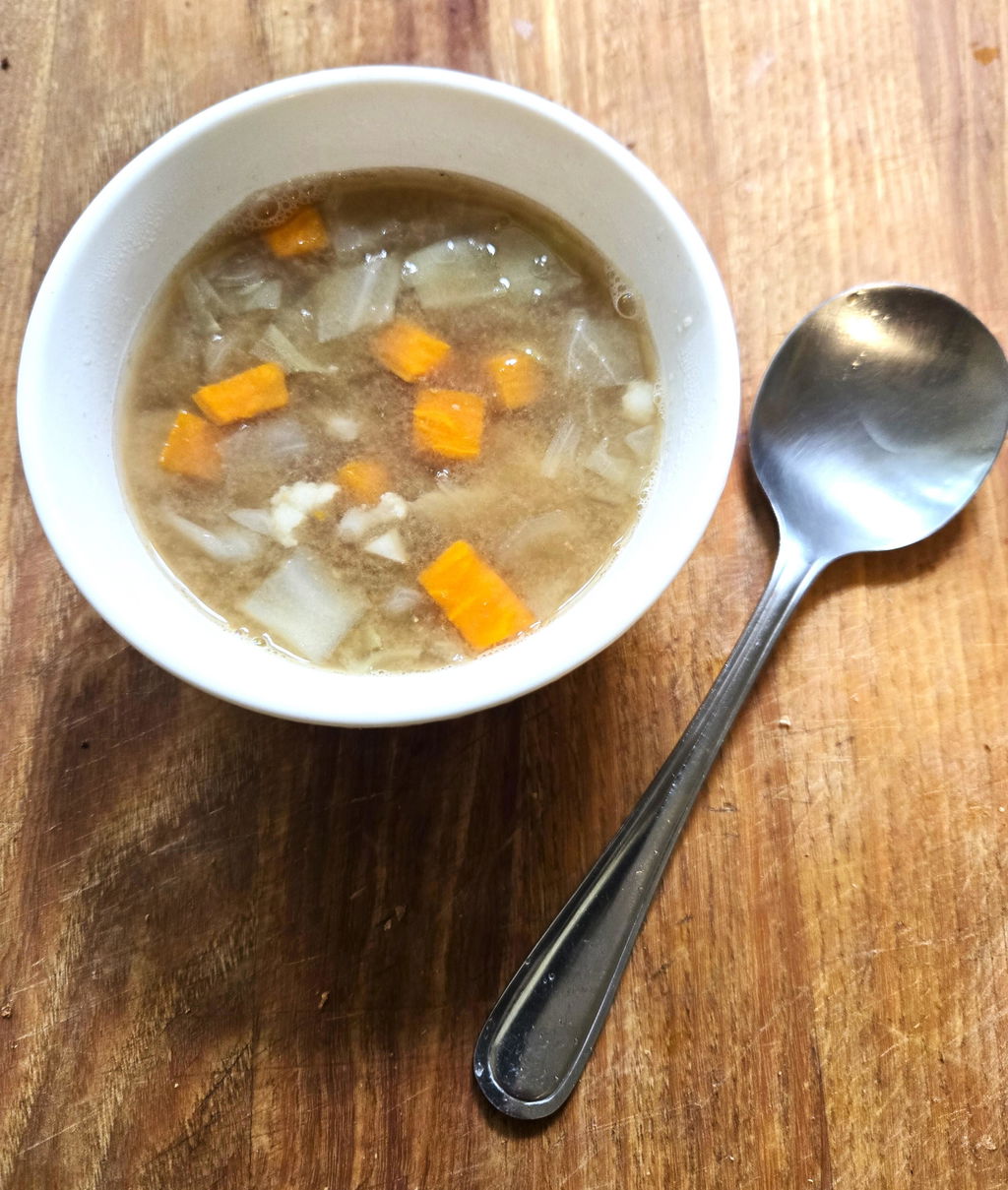
Thank you, I received the product quickly, well packaged, it reminded me of the taste of doenjang like my grandmother made. This is a classic taste, I recommend it


Products like these are what makes cooking fun. Will be reordering soon for sure.
[Kisoondo] Traditional Doenjang

Traditional doenjang from a Korean Food Master
Kisoondo’s Traditional Doenjang is made by Master Ki Soon Do, Korea’s Traditional Food Master No. 35, the same way her family has made jang for about 360 years and 10 generations.
It’s made from 100% Korean ingredients: local soybeans and bamboo-roasted salt, brined in pure underground spring water. No MSG, no preservatives, no chemical additives.
The meju blocks are hand-shaped, sun-dried, tied with rice straw and left to ferment naturally in clay jars. The result is a strong, sharp, deep flavor with a coarse texture and bits of whole soybean.
Available in 320 g and 500 g glass jars.

A 360-year-old family tradition
In the quiet village of Yucheon-ri in Damyang County, the Kisoondo family has made traditional jang for nearly 360 years, passing the methods down from one generation to the next. Today Master Ki, Korea’s Traditional Food Master No. 35, carries on the legacy and has been fermenting jang the same way for over 45 years.
Every winter, in the 11th lunar month, the meju (soybean blocks) are made, fermented for about a month, then aged again in large earthenware jars with salt. Each of the thousand jars is tended by hand.
At Kisoondo, the basics come first. That devotion is what gives the jang a depth of flavor that simply can’t be imitated.

Tradition is the heart of Korean cuisine
There’s a Korean saying: “You can tell the quality of a household by the taste of its jang.” Sauces are the foundation of Korean food, yet in today’s fast-paced world that depth of flavor is often lost.
Made by a true master of traditional fermentation, every jar of Kisoondo brings back the richness of Korean food culture, passed down for generations.
“My greatest wish is that people can keep enjoying good, honest jang for a long, long time.” — Master Ki Soon Do

Korea’s Traditional Food Master No. 35
Ki Soon Do (기순도) is officially honored by the Korean Ministry of Agriculture, Food and Rural Affairs as Traditional Food Master No. 35.
In 2008 she was designated a Traditional Food Master for jang (fermented sauces). In 2009 she received an award from the Minister of Culture, Sports and Tourism at the International Culinary Competition, and in 2015 her traditional soy sauce was selected as an Excellent Cultural Product.

Made the traditional way
It’s no exaggeration to say the foundation of Korean cooking lies in the taste of jang. Unlike factory-made doenjang with added chemicals, traditional doenjang is made only with soybeans, salt and water.
Kisoondo uses only Korean soybeans, grown in the clean regions of Muan, Gochang and Damyang. The beans are steamed, shaped into meju blocks and hung in the yard under the winter sun to ferment naturally for about a month. The sun-dried meju then goes into clay jars with Damyang bamboo salt and ferments in natural brine.
The brine is made with clear spring water drawn from deep under the limestone bedrock. In the jars, the meju and brine begin a long fermentation that builds layer upon layer of flavor.
Kisoondo’s jangdokdae (jar terrace) sits at the foot of a small mountain, where pine pollen carried on the wind adds to the ferment. With patience and the master’s care, the doenjang takes on a taste that is truly its own.

100% Korean-grown ingredients, never imported
The soybeans are grown in Muan, Gochang and Damyang. The brine uses mineral-rich spring water from deep underground, seasoned with Damyang bamboo salt.
Meju and brine age slowly in traditional jangdok (clay jars), with pine pollen from the nearby forest adding to the flavor. Nothing artificial: no MSG, preservatives or additives.

Only 3 ingredients
Korean soybeans, bamboo salt and water. With just these three, plus time and the dedication of a master, this doenjang carries the deep flavor of a tradition passed down for generations.

Bamboo-roasted sea salt
Sun-dried sea salt from Korea’s west coast is packed into Damyang bamboo stalks and roasted at high heat in a traditional kiln to make the bamboo salt used in this doenjang.

Spring water from 160 m underground
The doenjang is made with crystal-clear water drawn from 160 meters underground. The water is tested twice a year, so you can be sure it’s clean and safe.

No additives, no preservatives, no MSG
Kisoondo’s Traditional Doenjang is a wholesome paste made without any chemical additives or preservatives.

How Kisoondo doenjang is made
Korean soybeans are washed, slowly boiled until soft, and crushed in a traditional stone mill. The mash is hand-shaped into firm meju blocks, sun-dried, then tied with rice straw, which brings in the good microbes for fermentation.
The meju hangs in a warm place to ferment, then goes into clay jars with bamboo salt and spring water to age slowly outdoors. After months of natural fermentation, it becomes rich, savory doenjang.

320 g glass jar

500 g glass jar
Available in 2 sizes
Choose a 320 g or a 500 g glass jar.
Meet Grand Master Ki Soon Do
A short Arirang TV feature on Master Ki and her family’s jang (English version).
Making jang with the master
A clip from Kisoondo: Master Ki and her daughter-in-law making sticky-rice gochujang together, the same hands-on way they make their doenjang.
Full Ingredients List
Kisoondo Traditional Doenjang
Ingredient
%
Origin
Soybeans (대두)
90%
South Korea
Bamboo salt (죽염)
10%
South Korea
Allergy: contains soy

Original label (Korean)
Real Product Photos


Straight from Korea
Why shop with Gochujar?

Flat $5 Shipping to US
Just $5 to ship your order from Korea, or free when you order 2 or more items. No surprises at checkout.

Based Locally in Korea
We live here and buy from local makers in small batches, so it's always the latest batch.

Built on Trust, Not Ads
We’ve never paid for ads. Gochujar has grown purely through word of mouth and the trust of customers.
Refunds & returns
Something wrong? We'll fix it.

Damaged on Arrival
Email us within 10 days of delivery with photos, and we’ll refund you in full or send a replacement.

Wrong or Missing Item
Tell us within 10 days of delivery and we’ll send a replacement at no cost.

Lost in Transit
No tracking update for 3 weeks? We’ll trace it and refund you in full if it’s lost.
We can't take change-of-mind returns, since shipping back to Korea often costs more than the item. Approved refunds reach your original payment method within 5 business days. See our Refund Policy for details.
That’s it, folks!
We ship orders daily from Korea